
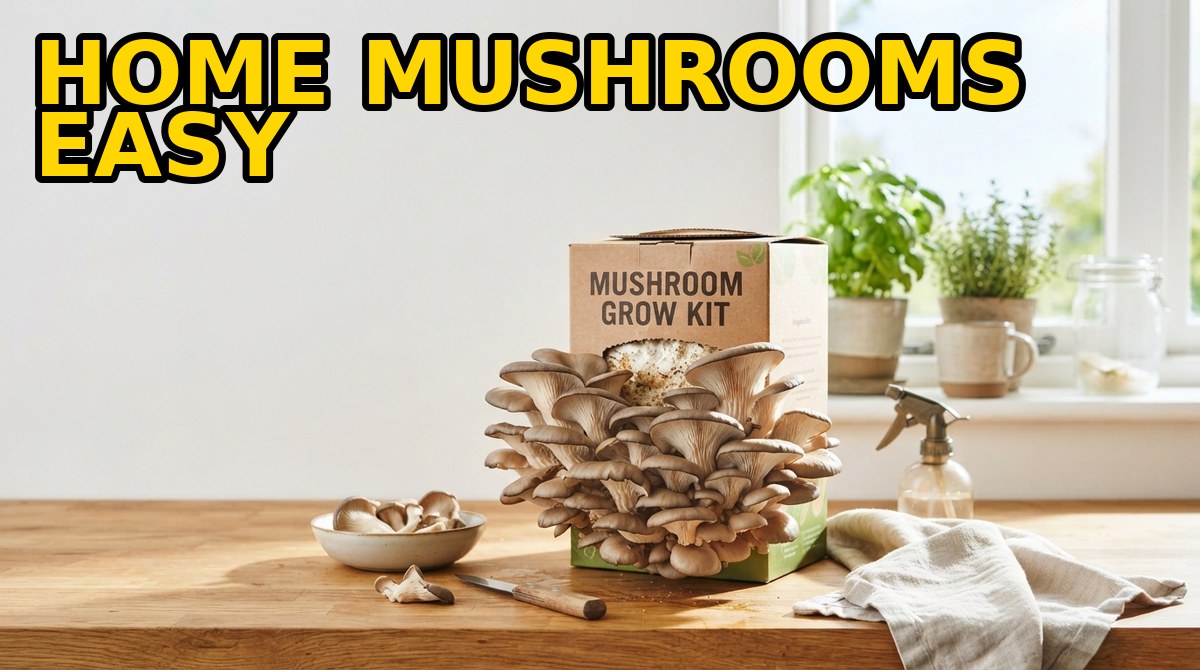
How to Grow Mushrooms at Home: The Complete 2026 Beginner Guide
Grain spawn, substrate, all-in-one bags and monotubs explained — how mushroom cultivation actually works, what supplies you need, and how to get your first flush without contamination.
Growing your own gourmet mushrooms is one of the most rewarding home projects you can start — and one of the most misunderstood. It looks intimidating from the outside, wrapped in talk of sterile technique, pressure cookers and colonization times, but the underlying process is simple and repeatable once you understand the pieces. This complete 2026 guide breaks down how mushroom cultivation works, the supplies you actually need (grain spawn, substrate, and all-in-one grow bags), and the exact steps to take a bag from inoculation to a harvestable flush.
Whether you want fresh oysters and lion’s mane on your kitchen counter or you are curious about a lower-cost, more sustainable food you grew yourself, the barrier to entry has never been lower. Modern sterilized substrates and all-in-one bags remove the hardest, most contamination-prone steps, so a first-time grower can realistically harvest mushrooms on the first try. Here is everything you need to understand before you start.
🍄 How Mushroom Cultivation Works
A mushroom is the fruit of a much larger organism called mycelium — a web of thread-like cells that grows through a food source. Cultivation is really just the art of giving that mycelium a clean, nutritious medium to colonize, and then triggering it to fruit. The lifecycle runs in a predictable order: you introduce a culture (spores or liquid culture) to a sterilized grain, the mycelium colonizes that grain to create grain spawn, the spawn is mixed into a bulk substrate to spread further, and once fully colonized, a change in light, air and humidity signals the mycelium to produce mushrooms.
The single enemy of every step is contamination. Mold and bacteria want the same nutritious medium your mushrooms do, so the entire craft revolves around keeping the substrate sterile until the mycelium is established enough to defend itself. That is why sterilized, ready-to-use supplies have transformed the hobby — they hand you a clean starting point instead of asking you to create one.
⚙️ The Supplies You Actually Need
- A culture: Spores or liquid culture of a legal gourmet species. This is what you inoculate your medium with — and it is usually sold separately from grow media.
- Grain spawn: Sterilized grain (rye, millet, or blends) that the mycelium colonizes first. Good spawn colonizes fast and evenly.
- Bulk substrate: A nutritious, moisture-holding medium (hardwood sawdust, straw, coir blends) where the colonized spawn spreads out and fruits.
- An all-in-one grow bag (optional but easiest): Combines grain and substrate in one filter-patch bag so mushrooms fruit inside it — no separate chamber needed.
- A clean environment: A still-air box or simply a wiped-down, draft-free surface, plus gloves and alcohol for the inoculation step.
Beginners almost always over-buy equipment at first. The truth is that with a quality sterilized all-in-one bag and a syringe of culture, you can complete an entire grow without a pressure cooker, flow hood or monotub. Those tools matter when you scale up, not when you start.
It helps to think about supplies as a progression rather than a shopping list. Your first grow needs almost nothing beyond a sterilized bag and a culture. Your second or third grow, once you know you enjoy the hobby, is when a small hand mister, a shotgun fruiting chamber, or a digital thermometer-hygrometer start to earn their place by giving you finer control over humidity and temperature. Only serious hobbyists pushing for repeatable, high-volume harvests need to invest in a pressure canner and a still-air box or flow hood — and by then the spend is justified by how much media they sterilize at once.
🍅 Grain Spawn vs. Substrate vs. All-in-One
Understanding these three terms clears up most beginner confusion. Grain spawn is colonized grain — it is the “seed” that carries living mycelium. Substrate is the bulk food the spawn is mixed into so the colony can expand cheaply and produce a worthwhile harvest; grain alone is too nutrient-rich and expensive to fruit from at scale. An all-in-one bag simply pre-packages a spawn layer and a substrate layer together in a single sterilized, filter-patched bag, so the transfer step — the riskiest moment for contamination — is eliminated.
For a first grow, the all-in-one bag is the clear winner: you inject culture through a self-healing port, wait for colonization, and fruit directly in the bag. Once you are comfortable and want bigger yields, you graduate to buying grain and substrate separately and spawning into a monotub, where a few pounds of spawn can colonize many pounds of substrate for a much larger flush.
Want a tested, beginner-friendly all-in-one kit recommendation?
🔥 Step-by-Step: Your First Grow
- Prepare a clean space. Wipe surfaces and your hands with 70% isopropyl alcohol. Work in a still, draft-free area to minimize airborne contaminants.
- Inoculate. Shake your culture syringe, wipe the injection port with alcohol, and inject your spores or liquid culture through the self-healing port. Do not open the bag.
- Incubate. Keep the bag warm (roughly 70–78°F) and dark. Over the next 1–3 weeks white mycelium spreads through the grain and into the substrate.
- Wait for full colonization. Let the mycelium fully colonize before fruiting. Rushing this step is the most common beginner mistake.
- Fruit. Introduce indirect light and fresh air. Pins form, then mushrooms grow through the filter patch over several days.
- Harvest. Pick just before the caps fully open for the best texture. Rehydrate the bag for a possible second flush.
🌿 Avoiding Contamination
If a grow fails, contamination is almost always why — and it is almost always preventable. The three rules that matter most: work clean, keep the bag sealed, and be patient. Working clean means alcohol on your hands, the port and any tools, and no talking or breathing directly over an open medium. Keeping sealed is why all-in-one bags win for beginners — the fewer times you open the medium, the fewer chances mold has to move in. Patience matters because a partially colonized bag has undefended food that contaminants can seize; a fully colonized one is far more resistant.
Learn to recognize trouble early. Healthy mycelium is bright white and rope-like or fuzzy. Green, black or slimy patches, or a sour or foul smell, signal contamination — bag it and dispose of it rather than risk spreading spores to future grows. Catching a bad bag quickly protects the rest of your setup.
The fruiting environment deserves its own attention, because colonization and fruiting want almost opposite conditions. During colonization the mycelium wants warmth, darkness and stale, carbon-dioxide-rich air — which is exactly what a sealed bag provides. To trigger fruiting you flip several of those switches at once: lower the temperature slightly, add indirect light (mushrooms use it to orient, not to photosynthesize), raise humidity, and introduce fresh air so carbon dioxide drops. All-in-one bags manage much of this passively through the filter patch, which is why they are so forgiving, but if you notice long, spindly stems and tiny caps, that is the classic sign of too little fresh air — the fix is more ventilation, not more water.
Humidity is the variable new growers most often get wrong. Too dry and pins abort or caps crack; too wet and you invite bacterial blotch and mold. The goal is high humidity with air movement, not a stagnant swamp. A light misting of the air around the mushrooms (never soaking the mushrooms themselves) a couple of times a day is usually enough for a bag grow, and it is far better to err slightly dry with good airflow than to drown the grow in standing moisture.
🌍 Choosing Your First Species
Not all mushrooms are equally forgiving, and your first choice should favor resilience over prestige. Oyster mushrooms are the classic beginner species: they colonize aggressively, tolerate a wide range of conditions, and out-compete many contaminants, which makes a first-time success far more likely. Lion’s mane is another friendly option, prized for its taste and reputed wellness properties, and it fruits happily from hardwood-based substrate. Once you have a grow or two behind you, you can branch into shiitake, king oysters and other species with more specific needs.
Whatever you choose, source legal, reputable genetics and match the species to your medium and climate. A vigorous strain in a clean, well-suited substrate does most of the work for you; a weak or poorly stored culture will struggle no matter how good your technique is. Genetics and cleanliness, not fancy equipment, are what separate a thriving grow from a disappointing one.
🙋 Frequently Asked Questions
Do I need a pressure cooker to grow mushrooms?
Not if you buy sterilized supplies. A quality sterilized all-in-one bag or pre-sterilized grain and substrate lets you skip the pressure cooker entirely; you only need one when you sterilize your own media at scale.
What is the difference between grain spawn and substrate?
Grain spawn is colonized grain that carries the living mycelium — the “seed.” Substrate is the bulk food (sawdust, straw, coir) you mix the spawn into so the colony can expand cheaply and fruit.
How long until I can harvest?
Most grows take about 6–8 weeks from inoculation to harvest, depending on the species, your inoculation method and temperature. Colonization alone can range from about 1 to 3 weeks.
Why did my grow get contaminated?
Almost always from unclean technique or opening the medium too often. Work with alcohol-sterilized hands and tools, keep all-in-one bags sealed, and let the mycelium fully colonize before fruiting.
What is the easiest way to start?
An all-in-one grow bag with a self-healing injection port is the simplest path: inoculate, incubate, then fruit directly in the bag with no transfer step and no separate chamber.
🏆 The Bottom Line
Home mushroom cultivation is far more approachable than its reputation suggests. Strip away the jargon and it is a clean, patient process: give mycelium a sterile, nutritious medium, keep contaminants out, and let a change in the environment trigger fruiting. Sterilized supplies — especially all-in-one grow bags — have removed the two hardest hurdles (making sterile media and transferring spawn without contamination), so a beginner can realistically harvest on the first attempt. Start with a forgiving species like oyster mushrooms, work clean, be patient during colonization, and you will be growing fresh gourmet mushrooms sooner than you think. When you are ready to pick a specific kit, our detailed review walks through a beginner-friendly all-in-one option.
Read next



Travel Hacks Guide Editorial Standards & Testing Methodology
At Travel Hacks Guide, we independently evaluate car rentals, international eSIMs, flight booking engines, and travel insurance. We never accept payment for ranking or recommendations. When you book via links on our site, we may earn an affiliate commission at no extra cost to you.