
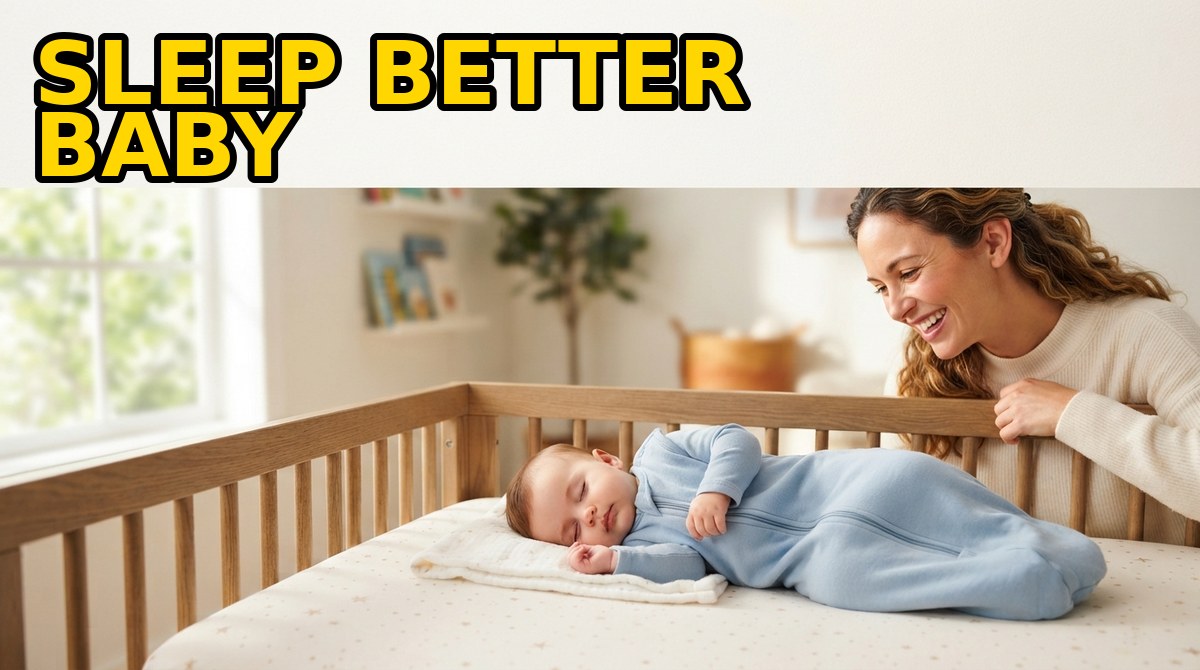
Helping Your Baby Sleep: The 2026 Guide to Weighted Sleepwear
Everything tired parents need to know about deep-pressure comfort, weighted swaddles and sleep sacks, safe-sleep guidance, and how to choose a sleep aid that actually helps your baby settle.
🌙 Why Babies Struggle to Settle
Newborns spend nine months tightly held, rocked and constantly in contact — then arrive in a big, still, quiet crib. That sudden loss of pressure and containment is one reason so many babies startle awake, fuss, and fight sleep. Their immature nervous systems have short sleep cycles, an active startle (Moro) reflex, and no sense yet of day and night. The good news: you can recreate a lot of that reassuring “held” feeling safely, and gentle weighted sleepwear is one of the tools parents reach for to help a baby settle.
🧠 What Is Deep-Pressure Comfort?
Deep-pressure stimulation is the gentle, evenly distributed weight your baby feels when cuddled or held. It engages the calming (parasympathetic) side of the nervous system, easing fussiness and encouraging relaxation. Occupational therapists use the same principle to help children self-regulate — and it is the idea behind weighted swaddles, bags, suits and vests, delivered in a wearable form. The emphasis is always on light, flexible weight: think of a reassuring hand resting gently, not a heavy blanket pressing down.
🍼 What Weighted Sleepwear Is — and How It Differs From a Weighted Blanket
Weighted sleepwear is a garment your baby wears — the light weight is sewn into pads distributed across the fabric, so it stays with your child and cannot slide over the face. This is a critical distinction: loose weighted blankets are not safe for infants. The AAP’s safe-sleep guidance advises against any loose bedding, pillows, or blankets in an infant’s sleep space because of the risk of suffocation. Wearable, tested weighted sleepwear is designed to keep any weight off the face and away from where it could cause harm.
🌀 Weighted Swaddles
For newborns. A wrap plus soft weight recreates the secure feeling of your arms — helpful in the fourth-trimester weeks and for babies who startle easily. Stop swaddling as soon as your baby shows any sign of rolling over, per AAP guidance.
😴 Weighted Sleeping Bags (Sleep Sacks)
For babies who have outgrown swaddling. Arms are free, so a rolling baby can reposition, while flexible weight across the torso still feels grounding. Sleep sacks are widely recommended as a safer alternative to loose blankets.
🧒 Weighted Suits & Vests
For active toddlers and older children who kick free of bags. Wearable designs keep the calming pressure with full freedom to move.
🛡️ Safety First: What the Guidance Says
Before any comfort feature, the fundamentals of safe infant sleep come first. Current AAP recommendations for babies under 12 months include:
- Back to sleep, every sleep — always place your baby on their back.
- Firm, flat sleep surface — a crib or bassinet that meets current safety standards, with a fitted sheet only.
- No loose items — no pillows, bumpers, or loose blankets in the sleep space.
- Never any weight over the face, head, or neck — weight must stay light, flexible, and evenly distributed across the body.
- Respect weight and size limits — fit the product to your child’s weight, not just age, and stop use at the manufacturer’s stated limit or the first sign of rolling for swaddles.
- Avoid overheating — dress in breathable layers and keep the room at a comfortable temperature.
If your baby was premature, has low muscle tone, reflux, or any medical condition, check with your pediatrician before using weighted sleepwear at all.
😴 Sleep Sacks vs. Swaddles: Which and When
Swaddling suits the earliest newborn weeks, when the startle reflex is strongest and containment is most soothing. As soon as your baby begins to show signs of rolling — usually somewhere around 8–12 weeks, though every baby is different — it is time to transition out of the swaddle to keep the arms free. That is where a sleep sack takes over: it preserves warmth and a cozy, grounded feeling while allowing safe movement. Many families move from a weighted swaddle to a weighted sleeping bag as a natural progression, then to a suit or vest for a wriggly toddler.
🕗 Building a Calming Sleep Routine
Sleepwear works best inside a consistent, predictable routine. A gentle wind-down teaches your baby’s body that sleep is coming:
- Dim the lights 20–30 minutes before sleep to support natural melatonin.
- A warm bath or gentle massage to signal the transition.
- Into the sleepwear — the same swaddle or sack every night becomes a sleep cue.
- Quiet feed, a song or a short book, kept calm and low-key.
- Down drowsy but awake, so your baby practices settling in their own space.
Consistency matters more than perfection. Keep wake windows age-appropriate and try to put your baby down before they become overtired, which usually makes settling harder.
🔍 What to Look For When Buying
1. Independent safety testing
Look for products tested to a recognized standard such as EU EN 16781:2018. Independent safety certification is non-negotiable for anything your baby sleeps in.
2. Flexible, evenly distributed weight
The weight should be soft and spread out — never heavy on the chest, never able to shift onto the face, and never restrictive. Your baby should move and change position freely.
3. Correct size for weight
Match the product to your child’s weight, not just age. A proper fit is essential for both safety and the calming effect.
4. Breathable fabrics
Choose breathable, temperature-appropriate materials and always follow safe-sleep guidance on room temperature and layering to avoid overheating.
🎯 Our Recommended Brand
If you want weighted sleepwear that covers every stage — swaddle, bag, suit and vest — with real safety testing and a parent-founded story behind it, Babydeepsleep is our top pick. We put their full range through a hands-on evaluation covering safety, sizing, materials and value.
Read our complete hands-on breakdown of safety, sizing, pricing, pros and cons:
❓ Frequently Asked Questions
Is weighted sleepwear safe for infants?
When the product is independently safety tested (e.g. EN 16781:2018), correctly sized, and uses light flexible weight kept off the face, it is designed for safe infant use. This is very different from a loose weighted blanket, which is never safe for babies. Always follow safe-sleep guidance and consult your pediatrician if unsure.
What does the AAP say about weighted products?
The AAP’s core safe-sleep message is back-sleeping on a firm, flat surface with no loose bedding. Guidance on weighted sleepwear continues to evolve, so choose independently tested products, keep weight light and away from the face, and check with your pediatrician before use.
At what age can we start?
Weighted swaddles are made for newborns, with bags, suits and vests sized up through the toddler and preschool years. Stop swaddling at the first sign of rolling, and always choose by your child’s weight.
How long until it works?
Some babies settle right away; many need a couple of weeks to get familiar with the gentle weight before you see faster settling and fewer wakings. Pair it with a consistent routine for the best results.
🏁 Final Thoughts
Recreating the safe, “held” feeling of your arms is one of the simplest ways to help a restless baby settle. Put the safe-sleep fundamentals first — back to sleep, a firm flat surface, no loose bedding — then layer in independently tested weighted sleepwear with flexible, evenly distributed weight, correct sizing and breathable fabrics. Combined with a calm, consistent routine, you give the whole family a better shot at a full night’s rest. For a brand that ticks every box, start with our Babydeepsleep review below — and when in doubt, always ask your pediatrician.
Read next



Travel Hacks Guide Editorial Standards & Testing Methodology
At Travel Hacks Guide, we independently evaluate car rentals, international eSIMs, flight booking engines, and travel insurance. We never accept payment for ranking or recommendations. When you book via links on our site, we may earn an affiliate commission at no extra cost to you.