
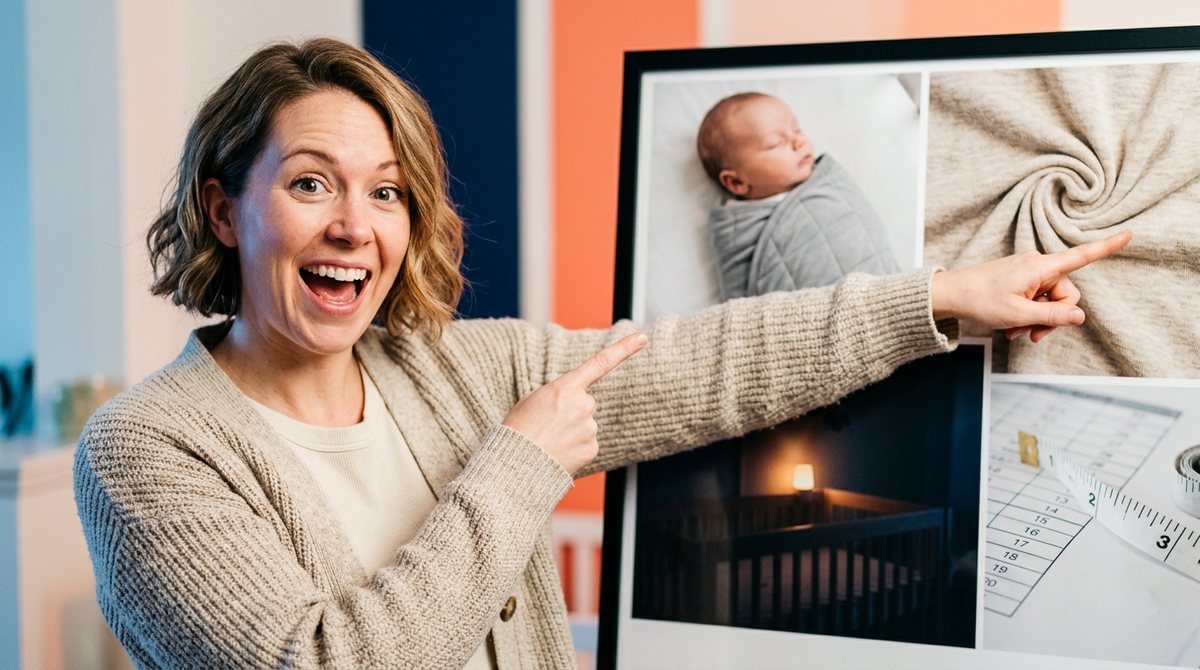
BABYDEEPSLEEP® sells the one thing an exhausted parent cannot buy in a shop: sleep. The Danish brand builds weighted swaddles, sleep bags, suits and vests graded by body weight from 5 kg to 22 kg, tested to the EU safety standard EN 16781:2018 and priced from €99. Our in-depth review breaks down what each garment is designed to do, what the real prices and policies are, and the safety rules that decide whether it is right for your child.
📋 Quick Verdict
Babydeepsleep approaches infant sleep with a mechanical idea rather than a chemical or behavioural one: put gentle, evenly distributed weight directly on the body, keep it there all night with a zip-up garment, and let pressure do the calming. The range is deliberately narrow — a weighted swaddle for non-walkers at 5–9 kg, a sleep sack for 8–12 kg, a sleep suit for walkers at 12–15 kg and a vest for 12–22 kg — and every item is sized by body weight first and age second.
Our review found the strongest arguments in the safety paperwork and the construction, not the marketing. The garments are declared tested to the EU safety standard for children’s sleep bags, EN 16781:2018, the main components carry OEKO-TEX certification, and the filling is phthalate-free PP granulate rather than loose beads that bunch into a corner. Because the weight is sewn in, the failure mode every weighted blanket suffers from does not apply.
The honest counterweight is price and context. At €99 to €119 per garment you pay a premium over an ordinary sleep sack, in EUR, from a European store whose range also mixes in maternity products and third-party brands. Weighted sleepwear for babies is a category some paediatric bodies outside the EU treat with caution, and the brand itself says to stop swaddling the moment a child shows signs of rolling. This is a considered purchase with real safety homework attached — not an impulse buy.
✅ Pros
- Four garments graded by measured body weight, not vague age bands
- Weight section sewn into the garment, so it cannot be kicked off overnight
- Declared testing to the EU safety standard EN 16781:2018
- OEKO-TEX certified fabric and zip, phthalate-free granules, lead- and nickel-free
- Breathable bamboo/cotton shell that can be machine washed at 30 °C
- Free shipping and a 30-day free returns window on the official store
- Buy Now, Pay Later checkout spreads the upfront cost
❌ Cons
- Entry price of €99 is a large multiple of an unweighted sleep sack
- Prices are listed in EUR, so buyers outside the EU add conversion and possible import duty
- Weighted sleepwear for infants is still debated by some non-EU paediatric organisations
- You only learn whether it works over two to three weeks, not overnight
- Must be discontinued as soon as a baby shows signs of rolling over
- It is sleepwear, not a medical device, and does not treat reflux or colic
- The store mixes in maternity items and third-party brands, which can confuse a first purchase
See the Full Babydeepsleep Range →
🤔 What Is Babydeepsleep?
Babydeepsleep is a Danish sleepwear brand built entirely on deep-pressure stimulation — the principle occupational therapists have used for decades with weighted blankets. Its origin story is unusually specific: it begins in 2012 with the founders’ daughter Emma, a colicky baby who woke hourly, and a mother who worked through the sleep literature before concluding that a weighted blanket helped most but was too warm and too easy to kick off. The solution was to sew the weight into a sleeping bag rather than lay it on top of a child. That idea is the company’s core patent claim, and every product is a variation on it.
In practice you are choosing between four garments, not between brands. The Mini weighted swaddle suits babies who cannot walk at 5–9 kg; the Baby sleep sack covers 8–12 kg; the Junior sleep suit is built for walkers at 12–15 kg; the Vest goes to 22 kg for children who will no longer tolerate a full-body bag. The practical questions are the same in each case: does the weight sit where it should, does the garment stay on, and is the safety documentation real. On the material we analyzed, the answers are yes, yes and largely yes.
⚙️ Key Features
Weight-graded sizing instead of age labels
The size guide works from measured body weight and whether the child walks. The swaddle is 80 cm shoulder to toe for 5–9 kg; the sack and suit are 90 cm; the vest is graded purely by weight to 22 kg. If a child sits between two garments, the site’s own guidance is to move up only when the lower one is genuinely outgrown — which avoids buying a weighted product that is either too heavy for a newborn or too small for a toddler.
A patented weight section sewn into the garment
Each product carries a dedicated weighted section rather than a removable insert or an outer blanket. The filling is phthalate-free polypropylene granulate, described as flexible, quiet and held in place by reinforced seams. Because the weight cannot migrate, the deep-pressure effect stays consistent from bedtime to morning, and a wriggling child cannot end up with the garment bunched at the feet.
Safety testing and certifications stated on the site
The brand states its products have been tested to the EU safety standard EN 16781:2018, which governs children’s sleep bags, and that the main components — fabric and zip — are OEKO-TEX certified, with lead- and nickel-free hardware. These are specific, checkable claims rather than vague “clinically proven” language, which matters more than marketing here.
Breathable bamboo/cotton shell with realistic care rules
The shell is an extra-breathable bamboo and cotton blend intended to reduce overheating, and the care instructions are refreshingly mundane: machine wash at 30 °C on a low spin, air dry, wash separately or with similar colours, and skip fabric softener.
Back, belly and weaning-friendly construction
On the swaddle, snap-fastened armholes let the garment work in a swaddled or arms-free configuration, and the brand states its construction allows sleeping on the back or the belly. There is also explicit guidance for phasing a swaddle out — one arm free, then both, then moving to the sack — the hard part most brands leave unexplained.
💰 Pricing & Plans
Pricing is published openly and is refreshingly simple: four products, no subscription, no tiers. All amounts below are listed in euros on the site at the time of our analysis, with free shipping, a 30-day free returns window and a Buy Now, Pay Later option at checkout.
| Product | Fits | Age guidance | Listed price |
|---|---|---|---|
| Mini Weighted Swaddle | 5–9 kg, 80 cm | 0–1 years, non-walkers | €99.00 |
| Baby Weighted Sleep Sack | 8–12 kg, 90 cm | About 1–2 years | €109.00 |
| Junior Weighted Sleep Suit | 12–15 kg, 90 cm | About 2–4 years | €119.00 |
| Weighted Sleep Vest | 12–22 kg | About 4–6 years | €109.00 |
| Shipping, returns and payment | Free shipping, 30 days free returns, Buy Now, Pay Later at checkout | Included | |
Check current pricing on the site before buying — promotions and regional taxes can change, and buyers outside the EU should confirm duties separately. Most families will buy two sizes over two to three years, which is the realistic budget to plan for.
⚔️ Babydeepsleep vs. Competitors
| Option | How the weight reaches the child | Stays on all night | Stated safety testing | List-price band |
|---|---|---|---|---|
| Babydeepsleep weighted garments | Sewn-in weight section inside a zipped garment | Yes by construction | EN 16781:2018, OEKO-TEX | Premium |
| Traditional weighted blanket | Loose layer over the body, not age-graded for babies | Routinely kicked off | Varies by maker | Mid to premium |
| Standard unweighted sleep sack | No pressure component at all | Yes | Usually EN 16781 | Low |
| Lightly weighted swaddle brands | Small weight pockets on chest or shoulders | Yes | Varies; often not stated | Mid |
Price bands are editorial positioning, not quoted competitor prices — check each brand’s own store for current figures.
The verdict is narrower than the marketing suggests. If you want deep pressure that stays in place all night and you accept a premium price, Babydeepsleep is one of the few ranges that solves the kick-off problem structurally rather than with straps. If you mainly want warmth, an ordinary sleep sack does that job for far less.
🎯 Who Should Use Babydeepsleep?
- Parents of a non-walking baby from 5 kg to 9 kg who fits the swaddle band
- Families who already suspect deep pressure helps because a weighted blanket calmed their child
- Households where a weighted blanket has been kicked off or proven too warm overnight
- Parents who prefer sizing decided by measured body weight rather than a vague age label
- European buyers who value free shipping and a 30-day returns window on a high-ticket purchase
- Parents of children up to 22 kg who still need calming at night and will wear a vest rather than a bag
🚫 Who Should Skip It
- Anyone whose baby is under 5 kg or whose paediatrician advises against weighted sleepwear
- Families shopping purely for warmth — a standard sleep sack is cheaper and does that job
- Buyers outside the EU who do not want currency conversion, import duty or a long return route
- Parents of a baby already rolling over, because swaddling must stop at that point
- Anyone expecting a guaranteed fix — the brand’s own stories describe weeks of adjustment
- Shoppers who want one purchase to cover all ages — you will likely buy two sizes as the child grows
- Households seeking treatment for reflux, colic or a diagnosed sleep disorder; this is sleepwear, not therapy
❓ Frequently Asked Questions
Is Babydeepsleep safe for a newborn?
The smallest product is the weighted swaddle for babies from 5 kg, tested to EN 16781:2018 with OEKO-TEX certified fabric and zip. The rule the brand states most clearly is that swaddling must stop once a baby shows signs of rolling over, because restricted arms raise risk in that position. Treat both as conditions, and discuss weighted sleepwear with your paediatrician before the first night.
How do I choose between the swaddle, sack, suit and vest?
Choose by weight and mobility. Non-walkers at 5–9 kg take the 80 cm swaddle; babies at 8–12 kg who have outgrown swaddling take the 90 cm sleep sack; walkers at 12–15 kg take the sleep suit; children from 12 kg to 22 kg who will not stay in a bag take the vest. If a child sits between two garments, keep the smaller one until it is genuinely outgrown.
How much does Babydeepsleep cost?
On the official store the weighted swaddle is €99.00, the sleep sack €109.00, the sleep suit €119.00 and the vest €109.00, with free shipping, a 30-day free returns window and Buy Now, Pay Later at checkout. All prices are listed in EUR, so buyers outside the eurozone should expect conversion plus any local import charges. There is no subscription.
How long before a weighted sleep garment shows any effect?
The brand’s own customer stories describe a lag. One parent notes that the first days brought little change and that roughly two to three weeks passed before the child adjusted and settled faster. Anyone expecting a first-night change is likely to be disappointed, which is why the 30-day returns window matters — it covers a full adjustment cycle.
Can a baby sleep on its stomach in these products?
Babydeepsleep states that the construction of its swaddle and sleep sack allows back or belly sleeping, and that the weight stays flexible enough to permit it. That is a manufacturer claim about garment design, not medical advice on sleep position; follow the safe-sleep guidance you have locally.
How do you wash a weighted sleep sack without ruining it?
Machine wash at 30 °C on a low spin, air dry rather than tumble dry, wash separately or with similar colours, and avoid fabric softener entirely. The brand says the swaddle washes and dries quickly, so it suggests one unit is enough for most families.
🏁 Final Verdict
Our review found a company with a genuinely differentiated idea and the paperwork to support its safety claims, sold at a price that makes it a decision rather than an experiment. The design solves the problem that sinks weighted blankets, and the sizing logic is measurable instead of guesswork. What it does not solve is cost, geography or the debate around weighted sleepwear for the youngest babies. If your paediatrician is comfortable and your child fits one of the four weight bands, this is one of the more defensible purchases in the category. If not, a plain sleep sack remains the safer and cheaper answer.
Ready to weigh the options against your child’s actual size?
We may earn a commission if you buy through our links, at no extra cost to you. This review is based on the manufacturer’s published specifications, safety documentation and pricing, not on personal use of the products.
Read next



Travel Hacks Guide Editorial Standards & Testing Methodology
At Travel Hacks Guide, we independently evaluate car rentals, international eSIMs, flight booking engines, and travel insurance. We never accept payment for ranking or recommendations. When you book via links on our site, we may earn an affiliate commission at no extra cost to you.