
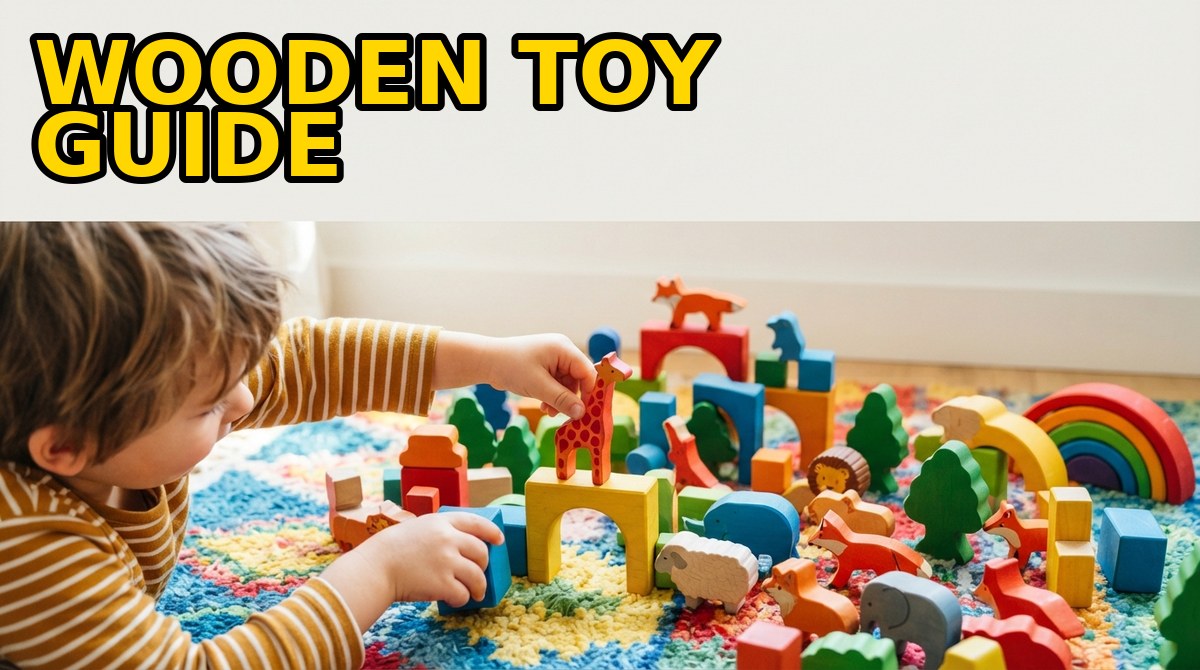
Wooden & Imaginative Play Toys: The 2026 Buyer’s Guide for Parents
Everything parents need to know about choosing durable, screen-free wooden toys — play kitchens, teepees, Pikler triangles and outdoor mud kitchens — that actually support how children grow, think and play.
🌟 Why Wooden, Open-Ended Toys Matter
Open-ended toys have no single “right” way to play, which is exactly why they hold a child’s attention long after light-up plastic gadgets are abandoned. A wooden play kitchen becomes a restaurant, a science lab and a bakery in the space of an afternoon; a teepee is a reading nook one day and a spaceship the next. This kind of play builds language, problem-solving, fine and gross motor skills, and independence — the developmental building blocks that structured, single-purpose toys rarely touch.
There is also a sensory dimension. Natural wood has real weight, grain and warmth, and children respond to that tactile honesty in a way they never do to hollow plastic. That physical feedback grounds pretend play in something concrete, which is part of why wooden toys feel calmer and less over-stimulating in a busy home. Fewer batteries, fewer flashing lights and fewer sounds mean the child — not the toy — drives the story.
🧠 The Montessori & Open-Ended Philosophy
Montessori and modern child-development research point in the same direction: children learn best through self-directed, hands-on activity in a prepared environment. Open-ended wooden toys fit that model perfectly. Instead of prompting a child with lights and pre-set outcomes, they invite the child to set their own goals, test ideas and correct their own mistakes — a quiet loop of concentration that is the heart of Montessori practice.
This is why so many Montessori-aligned homes favour realistic play kitchens, natural climbing frames and simple wooden figures over character-branded electronics. The aim is not minimalism for its own sake, but removing distraction so the child’s imagination and focus can do the work. A well-chosen wooden toy is essentially a blank stage that the child dresses and re-dresses for months on end.
🧸 Types of Imaginative-Play Toys
🍳 Play Kitchens & Play Food
Pretend cooking is a gateway to role play, sequencing and social skills. Look for real storage, sturdy knobs, and a bundled set of play food and cookware so the set is playable on day one. A good height range keeps toddlers and older siblings using it together, which is where the richest cooperative play happens.
🏕️ Teepees & Cozy Spaces
A dedicated “yes space” gives kids autonomy and calm. A teepee with a padded mat doubles as a reading corner and a self-regulation retreat — invaluable for busy households and for children who need a quiet place to reset. Solid wooden poles and washable, breathable fabric make the difference between an heirloom and a flimsy tent.
🧗 Pikler Triangles & Climbing Sets
Montessori-inspired climbers develop balance, coordination and confidence indoors. Solid-wood construction and stable geometry are non-negotiable for safety. The best sets fold flat for storage and add a reversible ramp or slide, so a single frame keeps pace with a child from cruising toddler to confident climber.
🌱 Outdoor Mud Kitchens
Sensory water and mud play supports curiosity and scientific thinking. A weather-ready design with shelves and a faucet turns any backyard into a discovery zone. Look for sealed, rot-resistant timber and stainless fittings so the kitchen survives season after season outdoors.
🎂 Matching Toys to Age & Stage
Age fit is where a lot of well-meaning purchases go wrong. Younger toddlers (roughly 18 months to 3 years) thrive with low, stable play kitchens, simple climbing frames and chunky play food they can grip and mouth safely. Preschoolers (3 to 5) start layering narrative onto play — this is prime time for teepees, dollhouses and cooperative kitchen sets. From 5 upward, children want more complexity: modular climbers, detailed accessory sets and outdoor mud kitchens that reward experimentation.
Always check manufacturer age guidance, and remember that the “grow-with-me” toys — adjustable climbers, expandable kitchens — give you the widest usable window and the best value over time.
🔍 What to Look For When Buying
1. Material & finish
Choose solid or FSC-certified wood with non-toxic, child-safe finishes and smooth sanded edges. FSC certification means the timber is responsibly sourced, and water-based, non-toxic paints keep little hands (and mouths) safe. Thin particleboard chips, swells and fails fast — a false economy.
2. Age appropriateness
Match the toy to your child’s stage. Climbing frames, teepees and play kitchens each have ideal age windows — check manufacturer guidance and favour adjustable designs that grow with the child.
3. Safety & stability
Look for a wide, stable base, rounded corners, secure joinery and no pinch points. Climbers should carry a clear weight rating and sit on a soft surface. Certified, tested construction is worth paying for on anything a child climbs or pulls up on.
4. Longevity & hand-me-down value
Durable wooden toys survive multiple children, making a higher upfront price cheaper per year than replacing plastic annually. Solid joints and replaceable parts extend that lifespan even further.
5. Included accessories
Bundled play food, cookware, dolls or mats mean the set is ready to play immediately — no scavenger hunt for add-ons and no surprise extra cost after checkout.
🎯 Our Recommended Brand
If you want a single brand that covers the whole spectrum — play kitchens, dollhouses, teepees, Pikler triangles and outdoor mud kitchens — with strong build quality at accessible-premium prices, Tiny Land is our top pick. We put their range through a full hands-on evaluation, looking closely at wood quality, finishes, stability and how well each piece held up to real, repeated play.
Read our complete hands-on breakdown of quality, pricing, pros and cons:
❓ Frequently Asked Questions
Are wooden toys really worth the higher price?
Per year of use, usually yes. Quality wooden toys last through multiple children and resist the breakage that forces frequent plastic replacements, so the cost-per-year is often lower than cheaper alternatives.
What’s the best first imaginative-play toy?
A play kitchen or a teepee are both excellent starters — they invite the widest range of pretend scenarios and grow with the child for years.
Are Pikler triangles safe?
When built from solid wood with stable geometry and used with supervision on a soft surface, they are a well-regarded Montessori tool for building motor confidence.
How do I know the paint and materials are non-toxic?
Look for FSC-certified wood and explicitly stated non-toxic, water-based finishes, plus safety-testing certifications on the product page. Reputable brands publish this information openly.
🏁 Final Thoughts
Screen-free, open-ended wooden toys are one of the best long-term investments you can make in a child’s play. Prioritize material quality, age fit, safety, longevity and bundled accessories — and you will build a play space that lasts through the whole family. For a brand that ticks every box, start with our Tiny Land review below.
Read next



Travel Hacks Guide Editorial Standards & Testing Methodology
At Travel Hacks Guide, we independently evaluate car rentals, international eSIMs, flight booking engines, and travel insurance. We never accept payment for ranking or recommendations. When you book via links on our site, we may earn an affiliate commission at no extra cost to you.