
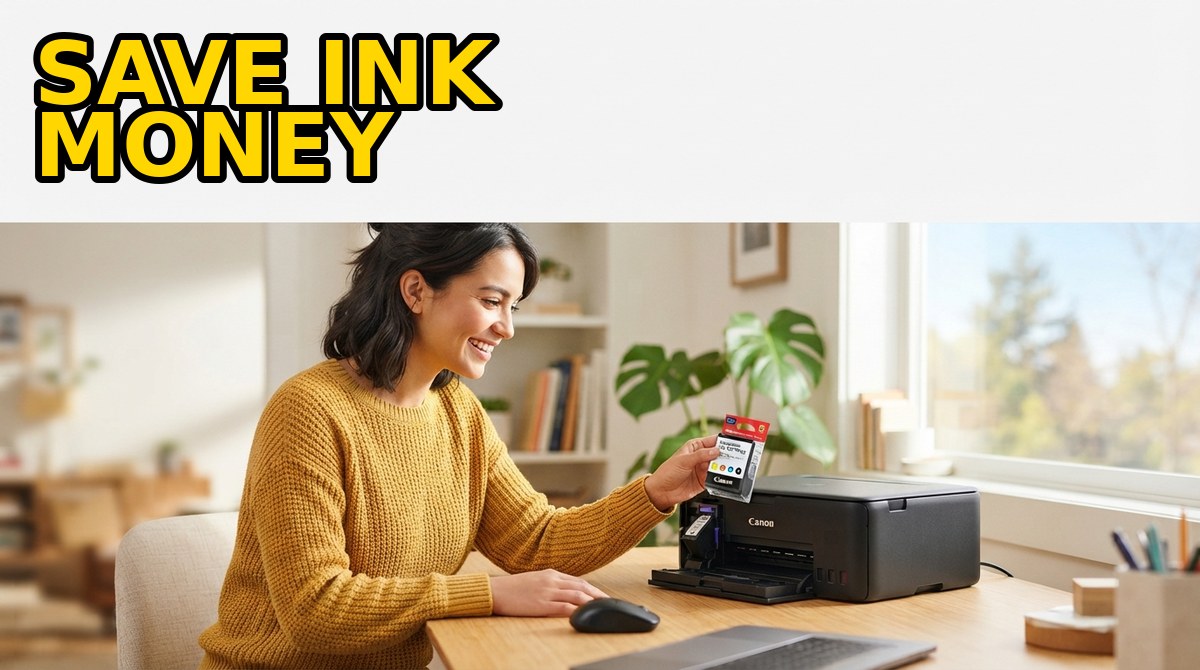
How to Save Money on Printer Ink: The Complete 2026 Guide
Printer ink is the quiet budget-killer of the modern home office: a £40 printer can swallow £200 a year in cartridges. The good news is that most of that spend is avoidable. This guide breaks down how to save money on printer ink in 2026 — what compatible cartridges really are, why cost per page beats sticker price, and the buying habits that cut your printing bill by half or more.
⭐ READ OUR FULL 999INKS REVIEW
Ink from 99p · free delivery over £30 →
Why Printer Ink Feels So Expensive
Printers are sold on the razor-and-blades model: the hardware is cheap, and the manufacturer makes its margin on consumables. A cartridge can cost more per millilitre than vintage champagne, which is why the “ink is a rip-off” complaint is practically universal. The economics only make sense if you treat ink as a recurring purchase you actively manage — not something you grab at the supermarket checkout when the printer starts blinking.
Understanding that dynamic is the first step to saving money on printer ink. The second step is knowing the three cartridge categories on the market, because the labels are frequently confused.
OEM, Compatible and Remanufactured: What the Labels Mean
Before comparing prices, you need to know what you are actually buying. The three cartridge types are very different products with very different price tags.
| Type | What It Is | Typical Price | Best For |
|---|---|---|---|
| OEM (original) | Made by the printer manufacturer | Full RRP — often £15–£40 per cartridge | Warranty conditions, colour-critical work |
| Compatible | New cartridge built by a third party to match the model | 30–60% cheaper than OEM | Everyday printing on mainstream printers |
| Remanufactured | Used OEM cartridge cleaned, refilled and re-tested | Cheap, but quality varies by supplier | Budget users with tolerant printers |
Compatible cartridges are the sweet spot for most people: they are brand new, built to match specific printer models, and often manufactured under certified quality standards (ISO 9001 is the benchmark worth looking for). The main risk — and it is worth naming honestly — is that some printers, particularly models with firmware-based cartridge checks, can be picky about non-OEM ink. Checking the supplier’s compatibility tool and returns policy before ordering removes most of the risk.
The Number That Matters: Cost Per Page
Formula: cost per page = cartridge price ÷ page yield
The price on the box is a distraction. What matters is cost per page — the cartridge price divided by its page yield. A £20 cartridge that prints 600 pages costs 3.3p per page; a £6 cartridge that prints 200 pages costs 3p per page. They are nearly identical, even though one looks three times more expensive.
Page yields are published by cartridge makers (usually in the product description, based on 5% coverage — roughly a typical text page). Once you start comparing cost per page instead of shelf price, two things happen: high-yield (XL) cartridges stop looking expensive, and cheap-looking small cartridges stop looking like bargains.
Seven Habits That Slash Your Ink Bill
1. Buy High-Yield (XL) Cartridges
XL cartridges cost more upfront but print two to three times as many pages. Because packaging and shipping are a fixed cost, the cost per page almost always drops with the bigger cartridge. If you print more than a few pages a week, XL is the default choice.
2. Match the Cartridge to Your Real Print Volume
High-volume office? Buy compatibles in bulk. Print twice a month? A standard-yield cartridge (or even the cheapest compatible) is fine — and ink that sits unused can dry out, so oversized cartridges for light printers are a waste of money.
3. Choose Compatible Cartridges from Reputable Suppliers
The cheapest ink online often comes from anonymous marketplace listings with no quality standard, no compatibility tool and no returns policy. A certified supplier — one that names its manufacturer, publishes ISO certification and offers support — costs a little more and removes almost all the risk. The headline savings on cheap printer ink come from the category, not from gambling on unbranded sellers.
4. Bulk-Buy and Consolidate Orders
Cartridge prices fall with quantity, and delivery thresholds change the maths entirely. One consolidated order a month — cartridges plus paper plus label tape — beats five small orders with four delivery charges. Free-delivery thresholds (like 999inks’s free delivery over £30) exist precisely to reward this behaviour.
5. Use Email Signup Offers and Promo Codes
Most UK cartridge retailers give 10% off for new email subscribers, and many run codes on top. It takes thirty seconds and the discount applies immediately. If you use an affiliate link, the attached code (for example AFF5 at 999inks) stacks with the signup offer.
6. Print Smarter: Draft Mode, Grayscale, and Preview
Software settings are the free savings. Default your printer to draft mode for everyday documents, force grayscale unless colour is genuinely needed, and preview before printing so you never reprint a page. These habits routinely cut ink consumption by a quarter without any change to what you buy.
7. Recycle and Refill Responsibly
Many retailers run cartridge recycling programmes, and refillable options exist for tolerant printers. Refilling is cheaper still, but the quality varies — treat it as an experiment for a secondary printer, not a strategy for the machine you depend on.
When OEM Is Still Worth the Premium
There are legitimate reasons to stick with original cartridges. If your printer is under warranty and the manufacturer conditions it on OEM ink, use OEM. If you do colour-critical work — photography proofs, client branding — the consistency of OEM output is a real advantage. And if your printer model is known to reject compatible cartridges (firmware updates occasionally tighten checks), the frustration is not worth the saving. In those cases, buy OEM from a discounted supplier rather than paying full RRP.
Mistakes That Quietly Drain Your Budget
- Printing in colour by default: switch the default to black-and-white; you will be surprised how rarely colour is actually needed.
- Ignoring draft mode: for internal documents, draft quality is indistinguishable at reading distance and uses a fraction of the ink.
- Letting cartridges dry out: a printer used once a month eats cartridges through clogging. Print a nozzle-check page periodically or use the printer at least weekly.
- Buying “compatible” from unverified sellers: the counterfeits that ruin cheap ink’s reputation come almost entirely from anonymous listings, not from certified suppliers.
- Ignoring page yield: buying on sticker price alone is how you end up paying more per page than OEM.
How to Choose a Printer Ink Supplier You Can Trust
Once you decide to buy compatible cartridges, the supplier matters more than the price tag. A genuinely safe budget supplier ticks five boxes, and every one of them is checkable in under a minute on the company website.
1. A Real Company Behind the Website
Check for a registered company name, VAT number and physical address in the footer. If the only contact channel is a web form and the company registration is missing, walk away.
2. A Compatibility Tool or Model Lookup
A supplier with a brand, series and model search dramatically reduces the chance of ordering the wrong item.
3. Published Quality Standards
Look for ISO 9001 certified manufacturing or an equivalent quality statement. This is the difference between “cheap ink” and “cheap ink that works”.
4. A Clear Returns and Guarantee Policy
A quality guarantee with a simple returns process turns compatible ink from a gamble into a routine purchase.
5. Responsive Customer Support
Live chat or same-day email support matters — a dead cartridge usually arrives right before a deadline.
❓ Frequently Asked Questions
Final Verdict
Saving money on printer ink is not about hunting for the cheapest listing on the internet — it is about buying the right cartridge category, comparing cost per page, consolidating orders, and using your printer’s settings to make every drop count. Done properly, those habits cut a typical household’s printing costs by more than half without any loss of print quality. The single biggest lever is switching from OEM to certified compatible cartridges from a reputable supplier, and the single biggest mistake is paying full RRP at the checkout counter out of habit.
One final thought: the goal is not to print as cheaply as possible, but to print as cheaply as possible without ever thinking about it. A reliable supplier, high-yield cartridges and a sensible reorder cycle remove the entire “I need ink right now” panic — and panic buying at full retail price is the most expensive printing habit of all.
Read next



Travel Hacks Guide Editorial Standards & Testing Methodology
At Travel Hacks Guide, we independently evaluate car rentals, international eSIMs, flight booking engines, and travel insurance. We never accept payment for ranking or recommendations. When you book via links on our site, we may earn an affiliate commission at no extra cost to you.