
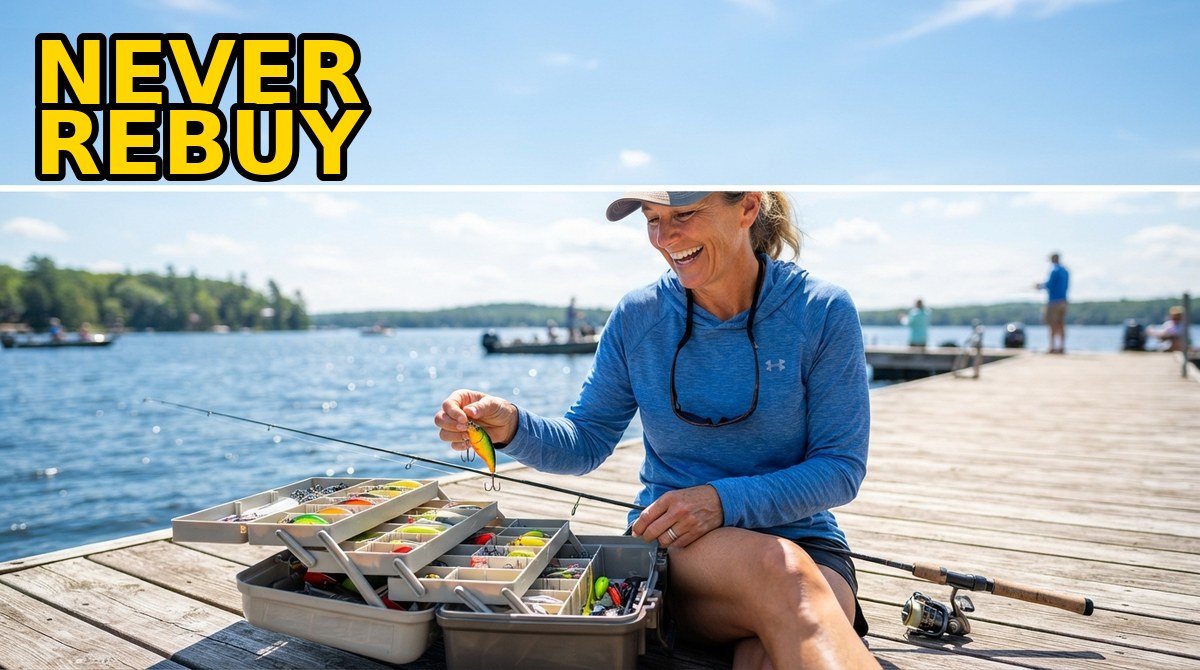
Building a Tackle Box Without Buying Everything Twice
Most first tackle boxes are a pile of near-misses: hooks in sizes that do not match the fish, sinkers too light for the surf, and a second spool of line bought because the first one was never labelled. This is the order to buy in, so the money you spend first is money you never spend again.
Building a tackle box is a small systems problem with a fixed budget and an unknown target: the fish you will meet, on the water you will actually fish, in the conditions that actually turn up. Get the order wrong and you finish the season with a box that weighs four kilos, cost a fortnight of groceries, and still cannot rig a bait when the wind picks up.
This is a beginner’s buying plan for a competent starter box — what to buy first, what to skip, how much of each thing is enough, and the traps that cause anglers to buy the same job twice.
🧭 Why Beginners Buy Everything Twice
A duplicate purchase is rarely a mistake at the till. It is decided earlier, when the box was assembled as a collection of goodwill rather than a set of jobs.
Buying by category instead of by job. A shop wall is organised by product type. Your fishing is organised by tasks: bait presentation, casting distance, holding bottom, landing a fish. Shop by category and you buy an example of everything and a solution for nothing.
Buying for the fish you dream about. Gear bought for a big-fish season is heavy, stiff and expensive, then left at home for the everyday sessions where the fish are small and the tackle shop is close.
Not labelling anything. Two spools that look alike at arm’s length become one spool you cannot trust. Unmarked hooks become a mystery pack you will not risk. The cheap purchase that is never used costs more than the good one that is.
🎣 Decide the Fishing You Actually Do Before You Spend a Rand
One written sentence replaces half of a beginner’s tackle budget. Answer three questions honestly: what water will I fish most often, what fish are realistically in front of me, and how far do I need to cast?
Shore, rock or boat. These are three different kits. Shore and rock fishing is about distance, abrasion and holding a bait in moving water, which rewards long rods, heavier line and generous sinker weights. Boat and estuary work rewards sensitivity and lighter terminal tackle.
Edible or non-edible. Targeting edible species such as bream, blacktail, shad or karanteen means lighter hooks, smaller baits and thinner leader. Chasing harder-fighting fish means heavier hooks, thicker leader and a rod that can lift them. Choose one as your default; add the other next season.
Distance. Casting distance is set by rod length, line diameter and sinker weight working together. Decide now whether your sessions are 30-metre casts into a working gully or long throws into the back of the surf — that decision fixes rod length and sinker weights, the two most expensive and least interchangeable items in the box.
🧰 The Four Layers of a Tackle Box, In Purchase Order
A working box has four layers. Buy them in this order and each purchase supports the next; buy them at random and you will own a full box that cannot fish.
Layer 1 — Terminal tackle. Hooks, swivels, sinkers, beads and bait cotton. This layer connects you to the fish and is lost most often, which is why it is stocked properly rather than generously.
Layer 2 — Rigged traces. A trace is the leader, hooks and swivels already assembled for a specific bait and species. It is the fastest way for a beginner to fish competently, because the rigging judgement has been made for you.
Layer 3 — Main line and leader. Braid or monofilament for the reel, plus heavier leader material for the business end where abrasion happens.
Layer 4 — Tools and storage. Pliers, bait knife, rag, headlamp and boxes that seal. Nothing here catches fish, and nothing here can be skipped without costing you a session.
🧤 Terminal Tackle: The Layer That Quietly Eats the Budget
Terminal tackle is where beginners overbuy most, because the items are cheap and the wall is enormous. Work to a short list and hold it there.
Hooks in three sizes, not ten. Pick the pattern that suits your target and buy three sizes: small for pan-sized fish, medium for your main target, large for bigger baits and the occasional bigger fish. A pack of every size on the rack means most oxidise before they are used.
Swivels sized to your line. Match swivel strength to your main line so the swivel is never the weak point or an over-engineered lump that kills bait movement. One size for light rigs, one for heavy.
Sinkers: the three-weight rule. Light for calm, shallow or estuarine water, medium for the everyday surf, heavy for strong current or long casts. Buy those three and stop. A box of fifteen weights is short of the two you actually use.
Beads and bait cotton are consumables. Buy them by the bag and keep them topped up; buying the same small bag five times a season at five times the price is the definition of the duplicate purchase.
Buying for rock and surf along the KwaZulu-Natal coast? Pre-rigged traces, bulk sinkers and heavy surf rods are the three things that stop a starter box costing double.
🧵 Line and Sinkers: Get the Weight Matrix Right First
Line and sinker choices interact, which is why they cause duplicate spending: change one and the other stops working.
Main line. Braid gives thin diameter and near-zero stretch, so more distance and better bite detection, at the cost of a stiffer feel and less forgiving knots. Monofilament is cheaper, stretchier and far more forgiving, which makes it the better learning line. Choose one and commit; switching back and forth is how anglers end up with three half-used spools.
Leader. Leader takes the abrasion that would otherwise destroy your main line on rock, shell and sand. Its breaking strain should be heavier than your main line, and its diameter should suit the sinker and trace you use.
Sinkers by condition, not habit. The correct weight is the lightest one that still holds your bait where you put it. Too light and the current rolls your rig along the beach; too heavy and you cast a brick, losing distance and risking damage on the strike.
Rig sinkers to break away when snagged. Losing a cheap weight is normal; losing a whole trace every cast is what empties a box.
💰 Pre-Rigged Traces and Bulk Packs: Where the Value Sits
The fastest, cheapest route out of the duplicate-purchase trap is to let someone else tie the rigs. Pre-rigged traces come ready to fish for a specific bait and species, removing the two most common early failures: poor knots and mismatched hook-to-leader combinations.
The maths works too. Buying components separately means retail prices for hooks, swivels, leader and beads, plus an evening tying rigs you will still lose to the rocks. A bulk pack of fifty pre-rigged traces priced between R225 and R400 works out far below component cost, and it removes the whole category of “I thought I had more of those” purchases.
Bulk pays for consumables you will certainly use up: traces, sinkers, hooks, beads, bait cotton. It does not pay for anything weight- or species-specific that depends on conditions you have not met.
For anglers on the KwaZulu-Natal coast, one locally focused shop sells wholesale trace packs, sinker batches and rigged crayfish gear tuned to that water: Lucikal’s Bait and Tackle, a family-run store in Phoenix, Durban. Their catalog is a useful reference for what local anglers actually buy — heavy rods, pre-rigged traces and bulk sinkers rather than a generic wall of imported lures.
🚫 The Duplicate-Purchase Traps to Avoid
A second rod instead of a longer one. Rod length sets casting distance and leverage. Two short rods still leave you outgunned on a long-cast beach. Buy the length your water needs, once.
Two similar reels. A spare is sensible. A near-identical second reel at the same size is money that should have been a different size, or more terminal tackle.
Mystery line. Line that is not labelled by strain and diameter gets replaced the moment it matters. Write the strain and the date on the spool when it arrives.
Duplicate lure colours. When fish are feeding, colour is a minor variable. Two of the same profile in different sizes beats five variants of one size.
Gear for a trip you have not booked. Offshore gear bought before the boat trip exists sits in the box for years. Buy it when the date is real.
Cheap tools that break on the first decent fish. Pliers, bait knife and headlamp get re-bought several times over at the lowest price. Start with the second tier.
🧽 Storage and Maintenance: What Makes Gear Last a Second Season
Half of what a beginner replaces should never have needed replacing. Saltwater destroys tackle stored wet, and rusted hooks cost you fish even when they look fine.
Rinse and dry after every session. Fresh water on rods, reels and hooks, then air dry before the box closes. Hooks and swivels fail first, and a rinse costs nothing.
Retire rusty hooks immediately. Draw the point across a thumbnail: if it skates instead of biting, it is done.
Compartmentalise by job, not by size. One compartment for small-hook rigs, one for traces, one for sinkers. Sealed boxes keep water and sand out, and clear lids let you inventory the box without emptying it — the real defence against buying the same item twice.
Store line and leader out of sunlight. Ultra-violet light and heat degrade monofilament over a season. A sealed container in a shaded garage keeps line honest far longer than a hot car boot.
📋 Your First-Season Buying Order
Here is the sequence, in a form you can take to the counter. Each step is complete before the next begins.
Step 1 — The box itself. One sealed compartment box for terminal tackle, one soft bag or larger box for traces, tools and bait. Two boxes that fit your bag, not four.
Step 2 — Terminal tackle in three sizes. Hooks, swivels and sinkers in the light, medium and heavy set that matches your water.
Step 3 — One rigged-trace pack per target. A small pack of pre-rigged traces for the two or three species you will actually meet.
Step 4 — Main line plus leader. One spool of main line sized to your rod and reel, one spool of leader. Label both.
Step 5 — Tools. Pliers, bait knife, headlamp, rag and bait cotton.
Step 6 — Only after five sessions. By then you know what is missing. Buy that and nothing else; every later purchase should be traceable to a session where you wanted it.
🏁 The Bottom Line
A tackle box built in the right order is cheaper and usable. Terminal tackle makes the rod work, rigged traces remove the weakest skill from the chain, line and sinkers decide whether your bait stays where you put it, and storage decides whether you ever buy any of it twice.
Buy for the fishing in front of you, in the order above, and stop once you have fished a few sessions and know what is missing. The money you do not spend on a second version of something you own is the money that buys the upgrade that matters.
Enough to complete the layers, not enough to finish them all at once. A functional starter set — sealed boxes, hooks, swivels and sinkers in three sizes, a pack of pre-rigged traces, one spool of main line, leader and basic tools — covers a first season. Spending more before your first sessions usually means buying gear for fishing you have not done yet.
You can tie your own, and eventually you should. For a beginner, pre-rigged traces remove the two failure points that cost the most fish: knots that slip under load, and hook-to-leader combinations that do not match the bait. A small pack for your target species lets you fish properly on session one while you learn to tie the same rigs.
Three covers most shore and rock fishing: a light weight for calm or shallow water, a medium weight for everyday surf, and a heavy weight for strong current and long casts. The right weight is the lightest one that still holds your bait in place. Fifteen weights means most stay in the box while you rebuy the two you use.
Monofilament is the better learning line: cheaper, stretchier, more forgiving, easier on knots. Braid gives more casting distance and better bite detection because it has almost no stretch, but it demands better knots and a lighter drag hand. Pick one and commit for a full season.
Buy to a job rather than a category, label everything, and keep the box compartmentalised by task so you can inventory it without emptying it. Keep a written list of what you own, and rule that anything bought after your first five sessions must be traceable to a session where you specifically wanted it.
⭐ READ OUR FULL REVIEWFeatures, pricing and our honest verdict →
Read next



Travel Hacks Guide Editorial Standards & Testing Methodology
At Travel Hacks Guide, we independently evaluate car rentals, international eSIMs, flight booking engines, and travel insurance. We never accept payment for ranking or recommendations. When you book via links on our site, we may earn an affiliate commission at no extra cost to you.