
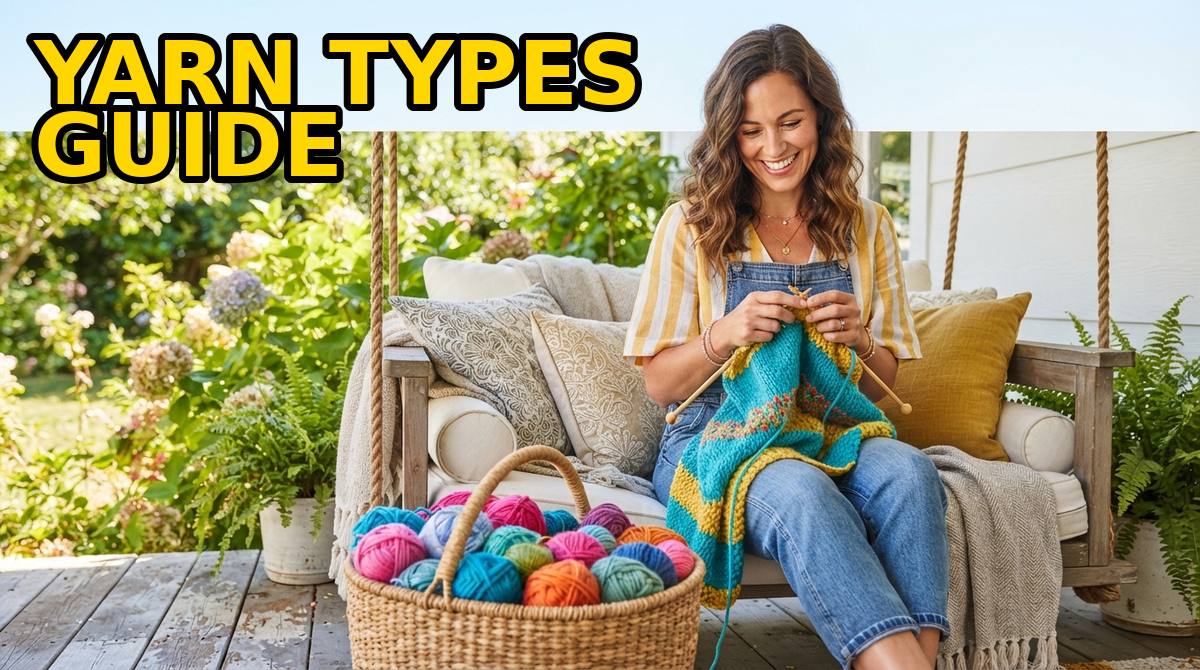
Knitting Yarn Types Explained: A Beginner’s Guide to Fibers, Weights and Ply
Lace, fingering, DK, worsted, chunky — what do yarn weights actually mean, which fiber should you pick, and why does ply matter? This guide breaks down every knitting yarn type so your next project turns out exactly as designed.
Walk into any yarn shop — or scroll any online store — and the first wall you hit is knitting yarn types. Fingering, sport, DK, worsted, bulky. Merino, cotton, acrylic, alpaca, blends. Single-ply, two-ply, four-ply. For a beginner, that wall can look like a foreign language, and picking the wrong yarn is the single most common reason a first project ends up frogged in frustration. The good news: the system behind it is far simpler than it looks. Once you understand yarn weight, fiber behavior and ply, you can look at any ball band and predict exactly how your finished fabric will feel, drape and wear.
🧶 What Is Yarn Weight and Why Does It Matter?
Yarn weight describes how thick a strand of yarn is — not how heavy the ball feels in your hand. It is the single most important number on a label because it determines which needle size you use and how many stitches you need per inch. Patterns are written for a specific weight; switch weights and your sweater suddenly fits a doll or a giant. The Craft Yarn Council standardizes eight weight categories, from lace (the thinnest) to jumbo (the thickest), and most labels now carry a small symbol — a skein of yarn with a number from 0 to 7 — that tells you the category at a glance. Memorize that number and you have unlocked 90% of the mystery.
📏 The 8 Yarn Weight Categories Explained
Every yarn weight has a typical needle range, a typical gauge, and a best-use case. Here is the practical breakdown:
0 — Lace Weight
The finest category, used for delicate shawls, lace scarves and heirloom doilies. Lace yarn is often knit on needles from 2.25 to 3.25 mm, and its magic appears when you block the finished piece — the openwork patterns bloom into shape. It is slow to knit and requires patience, but the results look stunningly intricate.
1 — Fingering / Sock Weight
The workhorse of socks and lightweight garments. Fingering yarn knits at roughly 7-8 stitches per inch on 2.25-3.25 mm needles. It is also the standard base for hand-dyed gradient yarns, because a slow color transition needs many rows to show its full effect — which is exactly why small-batch studios like Woolpedia dye their gradient lines on fingering-weight bases.
2 — Sport / Baby Weight
A touch thicker than fingering, sport weight works beautifully for baby clothes, lightweight pullovers and hats with good stitch definition. Typical gauge is 6-7 stitches per inch on 3.25-3.75 mm needles.
3 — DK / Light Worsted
DK (double knitting) is arguably the most versatile weight in the craft. It knits up quickly enough to feel rewarding, yet fine enough for cables, colorwork and garments with drape. Gauge runs about 5.5-6 stitches per inch on 3.75-4.5 mm needles. A huge share of modern patterns — from sweaters to blankets — are written in DK.
4 — Worsted / Aran
The most popular weight for sweaters, hats and scarves, worsted is thick enough to knit fast and durable enough for everyday wear. Expect 4-5 stitches per inch on 4.5-5.5 mm needles. If you are a beginner choosing your first sweater yarn, worsted is the forgiving middle ground.
5 — Bulky / Chunky
Bulky yarns (3.5-4 stitches per inch on 5.5-8 mm needles) turn any project into a quick win — thick cowls, oversized cardigans and cozy blankets come together in an evening or two. The trade-off: garments made in bulky yarn are heavier and less drapable.
6 — Super Bulky
Even thicker, ideal for statement pieces, arm-knitting and chunky throws. Knits at 2-3.5 stitches per inch on 8-12.75 mm needles. Dramatic, fast, and warm — but use it where you want structure, not flow.
7 — Jumbo
The thickest category, usually reserved for giant blankets and home decor. It demands very large needles or even your forearms and produces an unmistakably chunky, sculptural fabric.
🌱 Yarn Fibers: Natural vs. Synthetic vs. Blends
Weight tells you how thick a yarn is; fiber tells you how it behaves. Every knitting yarn type is built from one of three families: animal fibers, plant fibers, or synthetics — and most commercial yarns blend them for the best of several worlds.
Animal Fibers — Warmth and Elasticity
Wool is the classic choice: breathable, elastic, warm even when damp, and it recovers beautifully from blocking. Merino is the luxury end — finer, softer and less itchy than standard wool, which makes it the go-to for garments worn next to the skin. Alpaca is softer and warmer than wool but has less memory, so it can stretch out of shape over time. Mohair (from angora goats) adds a fuzzy halo and lightness, while cashmere is the ultimate in softness at a premium price. If you have sensitive skin, look for organic merino or extra-fine grades — many small studios, including Woolpedia’s hand-dyed Colors line, offer organic merino bases specifically for this reason.
Plant Fibers — Cool and Crisp
Cotton is cool, absorbent, and holds its shape, but it lacks wool’s bounce — garments can stretch and sag unless knit tightly. Organic cotton skips the heavy chemical processing of conventional cotton and is a favorite for baby items and summer tops. Linen is crisp, strong and gets softer with every wash, ideal for summer knits. Bamboo and viscose yarns drape beautifully and feel silky, though they can be slippery to knit. Modal — made from beechwood — is a softer, stronger relative of viscose, and FSC-certified vegan modal is a genuinely eco-friendly choice for makers who avoid animal fibers.
Synthetics and Blends — Durability and Affordability
Acrylic is inexpensive, machine-washable and allergy-friendly, but it pills, holds heat, and has a plastic feel at the budget end. Nylon is rarely used alone; blended into sock yarn at 15-25%, it adds the abrasion resistance that makes socks last. Cotton-nylon and merino-nylon blends are the standard for hard-wearing socks. Blends combine traits: wool-acrylic softens the price, cotton-wool adds drape, and merino-silk elevates sheen and strength. Reading the fiber percentages on the ball band tells you more about how a yarn will behave than almost anything else.
🧵 Ply, Twist and Single-Ply: What the Label Really Means
Beginners often confuse ply with weight. Historically, “4-ply” meant a fingering-weight yarn, and UK yarn names still carry that legacy. In modern terms, ply describes how many individual strands are twisted together — a 2-ply yarn has two strands twisted into one, a 4-ply has four. A single-ply yarn (one strand, lightly twisted) feels soft and shows color beautifully but wears faster and can split. More plies generally mean more durability, better stitch definition and less pilling, at the cost of some softness. Twist direction and tightness matter too: a tight twist creates a smooth, hard-wearing yarn; a loose twist gives a fluffy, airy fabric. For hand-dyed gradients, the dyeing happens after spinning, which is why the color shifts run continuously through each skein — a detail small-batch studios take real pride in.
🎨 How to Choose the Right Yarn for Any Project
Now that the categories make sense, choosing becomes a short checklist:
- Match the pattern’s weight and gauge. This is non-negotiable — the weight determines needle size and stitch count.
- Consider the garment’s use. Hats and mittens need wool’s memory; summer tops want cotton, linen or bamboo; socks need nylon for durability.
- Think about the wearer’s skin. Sensitive skin and babies favor organic cotton, modal or extra-fine merino.
- Check care instructions. Hand-wash-only yarns are lovely until you gift them to someone who owns a washing machine.
- Buy enough, and buy the same dye lot. Dye lots vary slightly; hand-dyed yarns vary a lot. For gradients, buy the full project quantity at once.
💡 Quick Reference: Matching Yarn to Project
| Project | Weight | Best Fibers |
|---|---|---|
| Lace shawl | 0 (lace) | Merino-silk, mohair-silk |
| Socks | 1 (fingering) | Merino-nylon, cotton-nylon |
| Baby clothes | 2 (sport) | Organic cotton, superwash merino |
| Sweaters | 3 (DK) or 4 (worsted) | Wool, merino, wool-acrylic blends |
| Hats & mittens | 4 (worsted) | Wool, alpaca-wool |
| Quick cowls & throws | 5-6 (bulky) | Acrylic, wool-blend, alpaca |
| Summer tops | 1-3 | Cotton, linen, bamboo, modal |
| Gradient projects | 1 (fingering) | Hand-dyed modal, organic merino |
✅ Common Yarn Mistakes Beginners Make (and How to Avoid Them)
Every knitter has made these — here is how to skip the pain:
- Substituting a different weight. If the pattern calls for DK, fingering is not “close enough.” You will run out of yarn and the size will drift. Check gauge, always.
- Ignoring the dye lot. Two balls of the same colorway from different dye lots can look visibly different mid-sweater. For hand-dyed gradients this matters even more — match lot numbers or buy in one order.
- Choosing by color alone. The prettiest yarn can be the wrong fiber for the project. Decide the fiber family first, then pick within it.
- Forgetting swatching. A 10 cm swatch takes twenty minutes and saves hours of frogging. Yes, even for scarves.
- Buying cheap acrylic for wearables. It will pill and trap heat. Reserve budget acrylic for practice swatches and decor.
🛒 Where Quality Yarn and Great Learning Meet
Once you know what you are looking for, the right yarn shop transforms your projects. Woolpedia is a small, Irish-run studio in County Cavan that hand-dyes and hand-winds gradient yarns in vegan modal, organic merino and organic cotton — with entry prices from about €3.24 for mini gradients and most full skeins between €4 and €13. It also pairs every pattern with a video walk-through and hosts over 1,600 free tutorials, which makes it an unusually good place to learn while you knit. The storefront is primarily German, but the yarn quality and the free learning library speak every language.
Worsted weight (category 4) is the classic beginner choice: it knits fast, shows stitches clearly, and is forgiving on 5 mm needles. DK (category 3) is a close second if you want finer, drapier fabric without going too thin.
No. Ply is the number of strands twisted together, while weight is the overall thickness. A 4-ply yarn can be fingering weight, and a single-ply yarn can be bulky. The weight category number on the label is what matters for pattern gauge.
Organic cotton, FSC-certified vegan modal and extra-fine organic merino are the gentlest options. Standard wool can itch sensitive skin; merino and plant fibers usually do not. Test with a small swatch against the neck or wrist before committing to a full garment.
Only if you re-calculate gauge, yardage and needle size — which is a lot of work. For most projects, stick to the stated weight. If you must substitute, keep the same weight category, aim for the same gauge, and buy 10-15% extra yardage to be safe.
They are dyed and wound in small batches by hand, so labor and material costs are higher per skein. You pay for soft, often certified-organic fibers, ethical small-scale production and color transitions that factory yarn cannot reproduce. For gradient projects the visual payoff is worth it.
🏁 The Bottom Line
Knitting yarn types stop being confusing the moment you learn two numbers: the weight category (0-7) and the fiber composition on the ball band. Weight controls size and speed; fiber controls feel, drape and durability. Match both to your pattern and your project’s purpose, and you will knit with confidence — and without the frogging. And when you want to treat yourself to yarn that is genuinely special, seek out a small-batch studio that hand-dyes its own colors: the softness, the ethics and the gradients make every stitch feel intentional.
⭐ READ OUR FULL REVIEWFeatures, pricing and our honest verdict →
Read next



Travel Hacks Guide Editorial Standards & Testing Methodology
At Travel Hacks Guide, we independently evaluate car rentals, international eSIMs, flight booking engines, and travel insurance. We never accept payment for ranking or recommendations. When you book via links on our site, we may earn an affiliate commission at no extra cost to you.